


8 Types of Conscious Dance

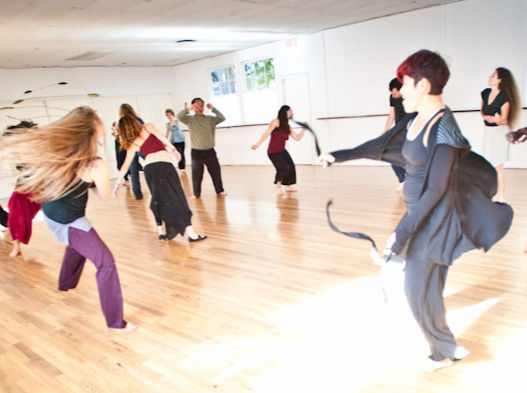
Science Direct describes conscious dance as a form of unchoreographed, intentionally non-evaluative, mindful movement commonly practiced in a group setting for authentic self-expression, self-discovery, interpersonal connectedness, and personal healing.

Mindful movement techniques are believed to help participants work through emotions buried in their unconscious that are distressing, scary, or simply too painful to verbalize.
When you move your body to music, it stimulates the brain's pleasure and reward centers. When you dance and let go, endorphins are released, helping change your outlook and process buried emotions.
8 Types of Conscious Dance:
1. Ecstatic Dance
Ecstatic dance is a form of dance in which dancers, sometimes without following specific steps, abandon themselves to the rhythm and move freely as the music takes them, leading to a trance-like state and a feeling of ecstasy. The effects of ecstatic dance begin with ecstasy itself, which may be experienced in differing degrees. Dancers are described as feeling connected to others and to their own emotions. The dance serves as a form of meditation, helping people to cope with stress and to attain serenity. (Wikipedia)
2. 5Rhythms
5Rhythms™ is a movement meditation practice devised by Gabrielle Roth in the late 1970s. It draws from indigenous and world traditions, using tenets of shamanistic, ecstatic, mystical, and Eastern philosophies. 5Rhythms also draws from Gestalt therapy, the human potential movement, and transpersonal psychology. Fundamental to the practice is the idea that everything is energy and moves in waves, patterns, and rhythms. (Wikipedia)
3. Somatic Dance
Somatics is a field within bodywork and movement studies that emphasizes internal physical perception and experience. The term is used in movement therapy to denote approaches grounded in the soma, or "the body as perceived from within." Somatic dance movement refers to techniques whose primary focus is the dancer's personal, physical experience. (Wikipedia)
4. Chakradance
Chakradance™ is a well-being movement practice. It uses spontaneous dance set to chakra-resonant music to heal and re-tune your whole energy system. The purpose of Chakradance is to help participants to more fully embody the soul. At the heart of Chakradance is the music. The seven major chakras are the energetic gateways through which body, mind, and spirit come together, embodying the soul. (chakradance.com)
5. Journey Dance
JourneyDance™ is a transformational dance form that combines freestyle and structured movement to inspire you to get out of your mind and into your body. The JourneyDance™ Transformational Dance Movement Flow leads participants on a ritual journey of physical and emotional transformation. Through breath, sweat, and expression, you experience yourself as pure, powerful energy. (theenergizedbody.com)
6. Nia Technique
The term Nia™ stands for ‘neuromuscular integrative action.’ In Swahili, Nia can be translated as 'with purpose'. Its basis is 52 movements that target the three main areas of the body: the base, core, and upper extremities. Nia uses nine "movement forms" to interact with your thoughts and emotions. The nine forms include: Jazz dance, Modern dance, Duncan dance, Tai Chi, Taekwondo, Aikido, Yoga, Feldenkrais Method, and the Alexander Technique. (Wikipedia)
7. Open Floor
Open Floor is a resource-based movement practice that explores new ways of moving and responding to what is happening with intention and purpose. Open Floor participants learn to understand habits and patterns for deeper insight and self-awareness. The belief is that the more you embody a range of responses in your movements, the more resources you can draw on to move through life with flexibility, resilience, and ease. (openfloor.org)
8. Medicine Circle
Circles have been used by many indigenous cultures throughout history as places for ceremony and transformation. Medicine Circle weaves ritual, community, movement, sounds, and prayer, allowing participants to reconnect with Spirit. In Medicine Circle, you dance, and the circle holds the big, small, quiet, loud, joyful, still, cathartic, and everything-in-between dances. The sounds from drums, rattles, bells, rain sticks, and song are used to call Spirit back in. Participants pray for themselves, for others, and for the greater whole. (syzygydanceproject.org)
There are many forms of conscious dance, ranging from 5Rhythms dance to somatic dance movement. Each is considered a type of mindful movement practice that encourages self-expression and the discovery of the wisdom held within the body.
Many of the movement modalities listed in this article could be considered a type of spiritual meditation. Don’t be afraid to step outside your comfort zone and try these different types of conscious dance. Several mentioned here are offered through Syzygy Dance Project. Keep in mind that you may need to attend a class several times before you relax into the rhythm of the movement and let go.

Comments